
Surfacing for Residential Landscapes
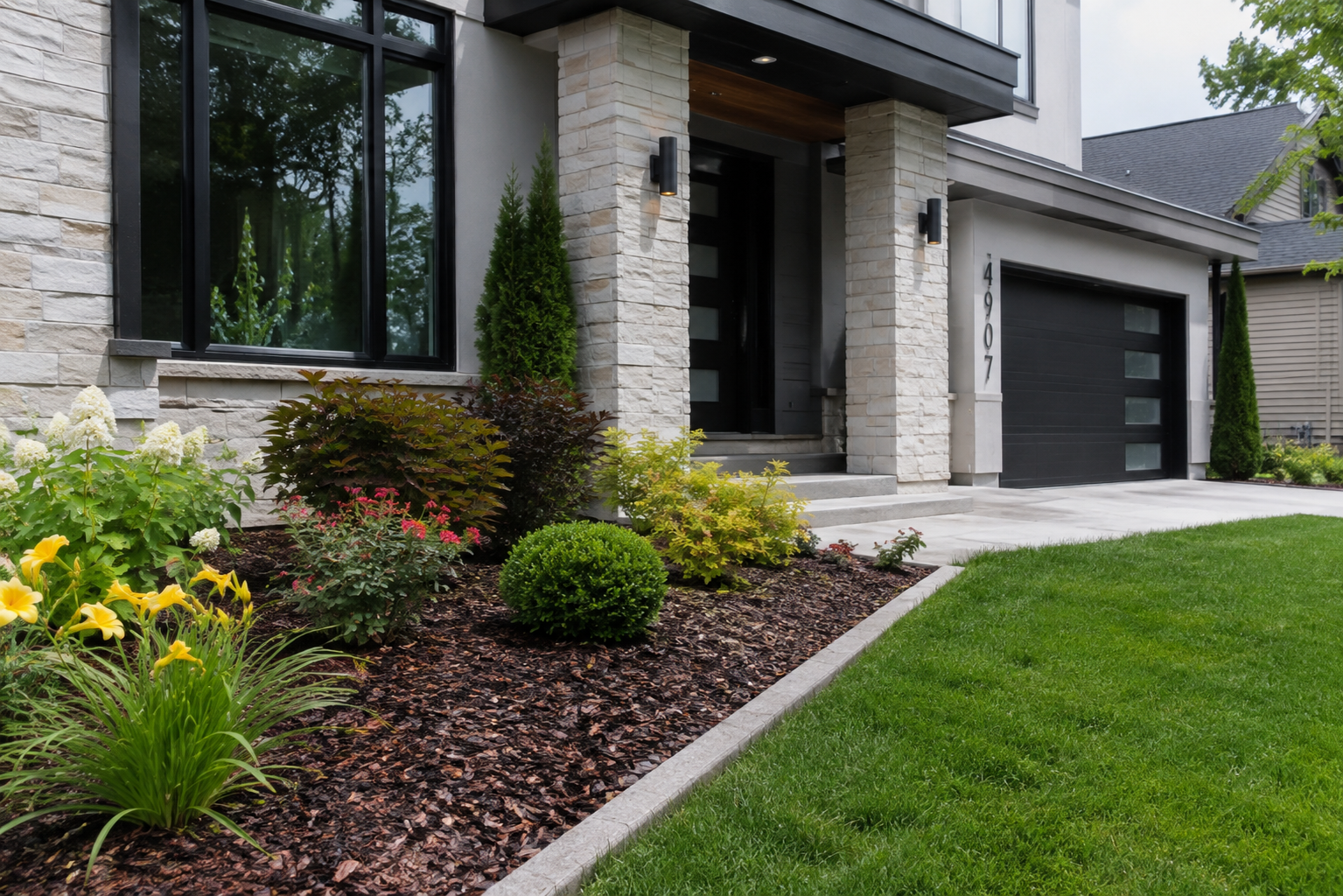
Transforming Landscapes with Low-Maintenance Surfacing
High-performance synthetic turf, rubber mulch, and engineered wood fiber designed to make residential landscapes easier to maintain and more enjoyable to spend time in
Between mowing, watering, and reseeding the same bare patches every spring, a natural lawn asks a lot for what it gives back. Residential surfacing is built to close that gap: a landscape surface that stays green through every season, drains quickly after storms, and holds up to kids, pets, and gatherings without the upkeep a living lawn demands.
Turf covers the lawn, and engineered wood fiber and rubber mulch round out the rest—play areas, garden beds, and walkways—for a low-maintenance system from front door to back fence.
Why Choose Residential Synthetic Turf or Rubber for Your Landscape?
Homeowners are turning to synthetic turf for more than just saving a Sunday backyard football game. From consistent color to a surface that performs in shade, high traffic, and wet weather alike, here's what residential synthetic turf brings to a landscape that grass alone can't.
- Realistic, Multi-Tone Fiber Blends. Modern synthetic turf fibers are built with varied shades of green woven together, so the surface reads as natural grass, rather than a flat, uniform mat. That color holds steady through every season, without the fading, browning, or bare patches a living lawn inherits from heat, drought, or heavy foot traffic.
- Engineered for Fast Drainage. Residential turf systems are built with a perforated backing that channels water away fast, which matters as much after a summer storm as it does during regular use. That drainage also helps the surface handle rain-prone landscapes and low spots that struggle to grow grass at all.
- Handles Everyday Wear and Tear. Residential landscapes see hard use: kids running through sprinklers, weekend cookouts, a dog scratching its back … Residential synthetic turf is constructed to stand up to that kind of everyday wear, including landscapes where pets are part of daily life, without the dead patches and worn ruts that heavy use leaves behind on grass.
- No Mowing, Watering, or Fertilizing. Once installed, synthetic turf doesn't need mowing, watering, seeding, or fertilizer, which cuts both the time and the water a lawn typically requires. For homeowners looking to scale back maintenance without giving up a green residential landscape, that's one of the most immediate benefits.
- Performs in Shade and Problem Areas. Grass struggles in heavy shade, compacted soil, or spots where drainage has always been a fight. Because synthetic turf isn't dependent on sunlight or soil conditions to stay green, it's often used to fill in the parts of a landscape where natural grass has never really taken hold.
- Curb Appeal That Doesn't Require Upkeep. A consistently green, evenly maintained lawn is one of the simplest ways to improve curb appeal, and synthetic turf delivers that look every day of the year, not just during the weeks after grass seed takes.
Rounding Out the Landscape: Engineered Wood Fiber and Rubber Mulch
Turf isn't the only material that fits into a residential landscape. For play areas, garden beds, and walkways, engineered wood fiber and rubber mulch offer two more low-maintenance options worth considering alongside synthetic turf.
Engineered Wood Fiber for Play Areas
Engineered wood fiber is a step up from loose wood chips. The fibers interlock as they settle, forming a firmer, more consistent surface that holds up under play equipment like swing sets and climbing structures. It's built to meet ASTM and ADA requirements for play surfacing, all while keeping the look of a natural wood material.
Rubber Mulch for Beds, Borders, and Walkways
Made from recycled rubber, rubber mulch is built to outlast the wood mulch it typically replaces in garden beds, borders, and pathways. It holds up season after season without breaking down, shifting, or fading the way wood mulch and gravel eventually do, so it doesn't need the yearly top-off that comes with traditional ground cover.
-
Realistic, Multi-Tone Color
Realistic, Multi-Tone Color
-
Fast Drainage
Fast Drainage
-
Low Maintenance
Low Maintenance
-
Made in the USA
Made in the USA
Where to Find Materials for Your Residential Landscape
Our list of brands includes installers and material suppliers for turf, engineered wood fiber, and rubber mulch, ready to help with your landscaping project.
Suppliers




Frequently Asked Questions
What is residential synthetic turf?
Residential synthetic turf is an artificial grass surface designed specifically for home landscapes, rather than sports fields or playgrounds. It’s built to handle everyday landscape use like foot traffic, pets, and outdoor furniture while staying green year-round.
How long does residential synthetic turf last?
With professional installation, ProGreen residential synthetic turf is generally built to last 15 to 20 years, though actual lifespan depends on the specific product, installation quality, and how the landscape is used.
Does residential synthetic turf hold up in landscapes with pets?
Yes. Residential turf systems are constructed to withstand regular wear from pet traffic, and their drainage backing is designed to move moisture through the surface, rather than letting it collect.
How much maintenance does residential synthetic turf require?
Residential synthetic turf doesn't need mowing, watering, seeding, or fertilizing. Occasional rinsing, light debris removal, and inspections are generally all that's needed to keep the surface looking consistent.
Can residential synthetic turf be installed in shaded or low-drainage areas of the landscape?
Yes. Because it doesn't rely on sunlight or soil conditions to stay green, synthetic turf is often used to cover shaded areas, compacted soil, or low spots where natural grass struggles to grow.
What's the difference between engineered wood fiber and rubber mulch?
Engineered wood fiber is a wood-based material that settles and interlocks into a firm, consistent surface, most often used under play equipment. Our rubber mulch is made from recycled rubber and is typically used in garden beds, borders, and walkways as a longer-lasting alternative to wood mulch.
Request a Quote
Ready to talk through residential synthetic turf, engineered wood fiber, or rubber mulch for your landscape? We’re here to help you find the right solution.