.jpg)
Why Low-Maintenance Surfacing Matters for Parks and Recreation Departments
Parks and recreation departments face ongoing challenges balancing budget constraints with the need to maintain safer, accessible, and attractive facilities for their communities. Traditional surfacing materials often demand significant resources for upkeep, repairs, and replacement, straining already limited maintenance budgets and personnel. The shift toward low-maintenance recreational surfacing represents not just a cost-saving measure but a strategic approach to sustainable facility management.
Modern recreational surfacing systems offer parks directors and facilities managers the opportunity to reduce long-term operational costs while simultaneously improving safety outcomes and extending surface lifespan. These advanced materials minimize the need for frequent repairs, seasonal replenishment, and labor-intensive maintenance tasks that divert resources from other critical park improvements. When surfaces require less attention, staff can focus on enhancing overall park experiences and addressing broader community needs.
Beyond financial considerations, low-maintenance surfacing directly impacts community access and safety. Surfaces that maintain consistent performance characteristics over time provide reliable impact attenuation and accessibility compliance, ensuring that playgrounds and recreational areas remain safer and welcoming year-round. This consistency eliminates the safety gaps that can emerge when traditional materials degrade, settle unevenly, or require temporary closures for maintenance work. For recreation managers committed to inclusive community spaces, dependable surfacing becomes foundational to fulfilling that mission.
Poured Rubber and Bonded Rubber Systems: Durable Solutions for High-Traffic Areas
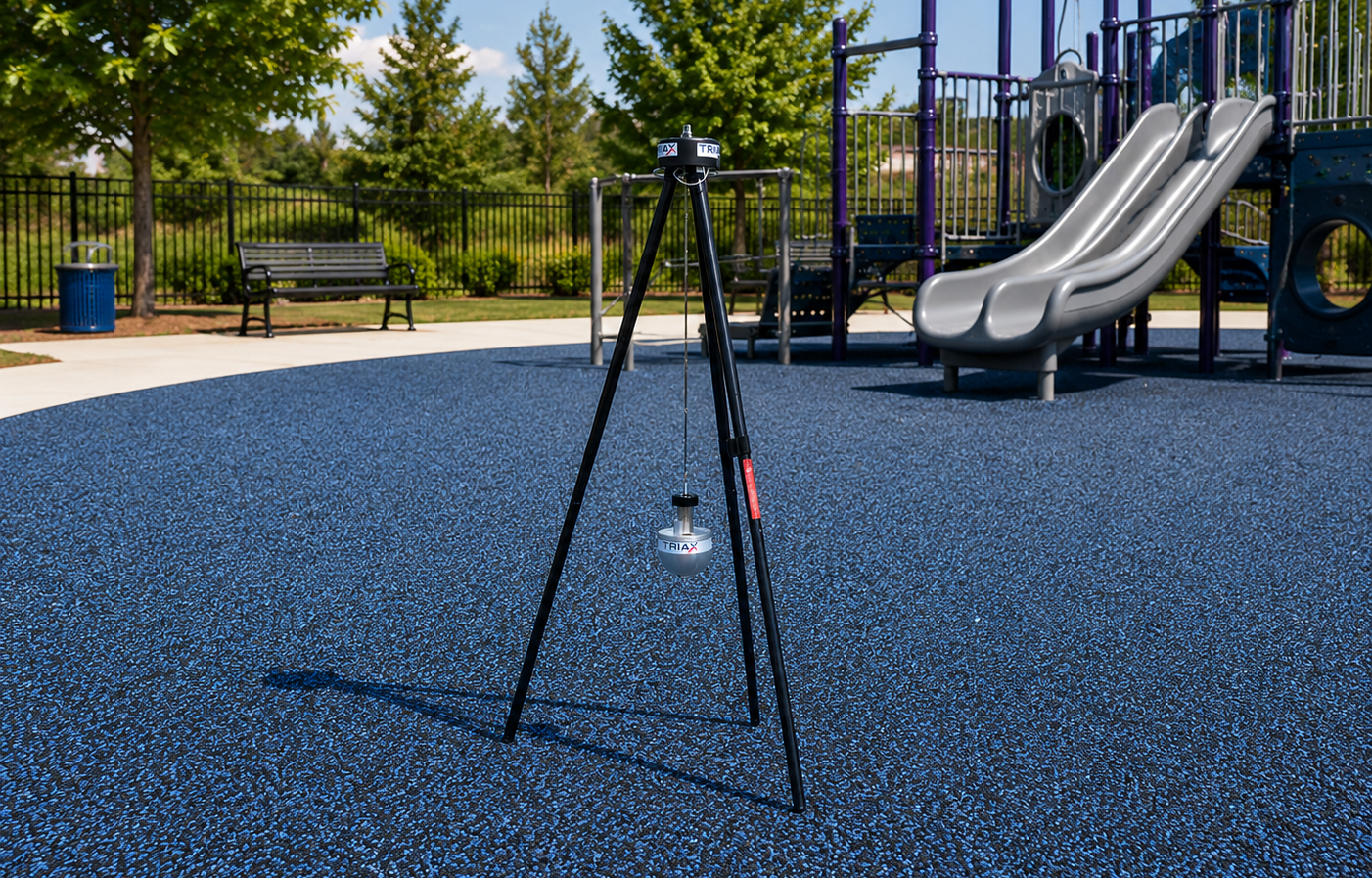
Poured rubber surfacing stands as one of the most resilient options for high-traffic park environments where durability and safety performance are paramount. This seamless surfacing system provides compliant, resilient protection that meets both ADA accessibility standards and CPSC safety guidelines for impact attenuation. The monolithic nature of poured rubber eliminates joints and seams where traditional surfaces might separate or collect debris, creating a unified surface that withstands intensive use while requiring minimal ongoing maintenance.
The installation process for poured rubber involves applying layers of rubber material directly to prepared substrates, creating a custom-fitted surface that conforms to the specific layout and fall height requirements of each play area. This customization ensures optimal safety performance tailored to individual equipment configurations. Once cured, the surface resists weathering, UV degradation, and the wear patterns that compromise lesser materials. Routine maintenance typically involves simple cleaning procedures rather than the continuous replenishment or leveling required by loose fill alternatives.
Bonded rubber systems offer a complementary approach for park projects seeking the benefits of rubber surfacing with a distinct aesthetic. Utilizing larger rubber pieces in a single-layer system, bonded rubber creates an appearance reminiscent of natural mulch while delivering superior performance characteristics. The porous structure facilitates rapid drainage, preventing standing water that can lead to surface degradation and creating unusable conditions. This drainage capability proves particularly valuable in climates with frequent precipitation or for splash pad perimeter applications.
Both poured and bonded rubber systems demonstrate exceptional longevity in demanding recreational environments. Their resistance to displacement, compaction, and decomposition means facilities maintain consistent critical fall height protection throughout the surface lifespan. For project managers evaluating life-cycle costs, the extended service life and reduced maintenance requirements of rubber systems frequently offset higher initial installation investments, delivering superior value over multi-year budget periods.
Synthetic Turf Applications: Resilient Performance with Minimal Upkeep
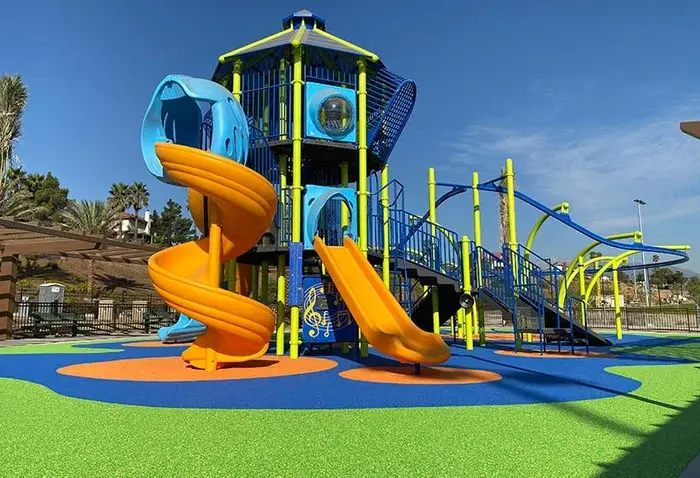
Synthetic turf has evolved significantly from early recreational applications, now offering sophisticated surfacing solutions that combine natural aesthetics with engineered performance characteristics. When installed as a system, synthetic turf provides a resilient, low-maintenance safety surface that transforms playground and recreational areas while dramatically reducing the labor associated with natural grass care. The elimination of mowing, irrigation, fertilization, and seasonal reseeding represents substantial operational savings for parks departments managing multiple facilities.
Modern synthetic turf systems designed for recreational safety incorporate specialized shock-absorbing underlayment that delivers compliant impact attenuation for playground applications. The multi-layer construction provides long-lasting durability while maintaining the visual appeal that makes these surfaces attractive for diverse park environments from traditional playgrounds to multi-use recreational zones.
The maintenance requirements for synthetic turf installations center on straightforward procedures that require minimal specialized equipment or training. Regular debris removal, periodic grooming to maintain fiber orientation, and occasional rinsing to remove accumulated dust comprise the primary upkeep tasks. These simple procedures contrast sharply with the intensive maintenance demands of natural grass or the continuous monitoring and replenishment needs of loose fill surfacing materials. The consistent playing conditions synthetic turf provides year-round also enhance facility utilization, allowing parks to serve community needs regardless of weather conditions or seasonal growing cycles.
For landscape architects and project developers designing contemporary park spaces, synthetic turf offers design flexibility that extends beyond traditional playground boundaries. The material adapts to varied applications, including sports fields, fitness areas, dog parks, and general recreation zones. This versatility enables cohesive site designs that maintain visual consistency while addressing different functional requirements. Customization options available with synthetic turf systems further support creative design approaches that can reflect community identity or wayfinding strategies within larger park complexes.
Rubber Tiles: Versatile Options for Multi-Use Spaces
Rubber tiles represent a modular approach to recreational surfacing that combines compliance with installation flexibility and long-term maintenance advantages. These pre-manufactured units offer durable, compliant surfacing solutions for playgrounds, parks, and recreational spaces with installation processes that minimize site disruption and construction timelines. For facilities managers working within compressed project schedules or seeking solutions that allow phased implementation, rubber tiles provide practical advantages that rigid surfacing systems cannot match.
The modular nature of rubber tile systems creates inherent maintenance benefits that appeal to operations-focused decision makers. Individual tiles can be replaced if damaged without requiring wholesale surface replacement, allowing targeted repairs that control costs and minimize facility downtime. This replaceability proves particularly valuable in high-impact zones beneath swings or slide exits where concentrated use patterns might eventually compromise surface integrity. The ability to address specific wear areas while leaving surrounding surfaces intact represents a significant advantage over monolithic systems where localized damage can necessitate broader interventions.
Installation versatility distinguishes rubber tiles as solutions for challenging site conditions and retrofit applications. The tiles accommodate irregular site geometries, integrate with existing landscape features, and install over various substrate conditions that might complicate poured surface applications. For park projects involving playground relocations, expansions, or updates to aging facilities, rubber tiles offer adaptable solutions that work within real-world constraints. The dry installation method eliminates curing times and weather-dependent scheduling concerns, allowing projects to progress efficiently regardless of seasonal timing.
From an accessibility and safety performance perspective, rubber tiles deliver consistent compliance when properly specified and installed. The interlock systems or adhesive methods used to secure tiles create unified surfaces that meet ADA requirements for firmness and stability while providing appropriate impact attenuation for fall height protection. The non-porous surface resists moisture absorption and facilitates drainage, preventing the degradation patterns that affect materials susceptible to water damage. For multi-use spaces where recreational areas transition to pathways or gathering areas, rubber tiles enable coherent surface treatments that serve diverse functions while maintaining consistent performance characteristics.
Selecting the Right Surfacing System for Your Park Project Goals
The selection of appropriate recreational surfacing requires careful evaluation of multiple factors that extend beyond initial cost considerations. Project managers and landscape architects must assess site-specific conditions, intended use patterns, safety requirements, accessibility mandates, and long-term maintenance capabilities when determining optimal surfacing solutions. A systematic approach to this evaluation ensures that selected systems align with both immediate project objectives and broader departmental goals for sustainable facility management.
Site assessment forms the foundation of informed surfacing decisions. Factors including drainage characteristics, substrate conditions, sun exposure, tree coverage, and proximity to water features influence which surfacing systems will perform optimally in specific locations. High-traffic areas near playground entrances or beneath popular equipment benefit from the durability of poured rubber or bonded rubber systems, while larger play zones might leverage the coverage efficiency and aesthetic qualities of synthetic turf. Understanding these site-specific variables allows designers to match surfacing characteristics to locational demands.
Safety compliance and accessibility requirements establish non-negotiable parameters for surfacing selection. All recreational surfacing must meet CPSC guidelines for impact attenuation based on equipment fall heights and comply with ADA standards for accessibility. Safety surfacing companies such as FlexGround, Robertson Recreational Surfaces, The Fibar Group, and SprintPlay offer products that meet or exceed national compliance standards. Beyond these baseline requirements, project goals may prioritize additional safety features such as enhanced slip resistance for aquatic areas, where specialized splash pad solutions provide anti-microbial properties and ASTM compliance. Documenting compliance requirements early in project planning prevents costly design revisions and ensures that selected systems support comprehensive safety objectives.
Life-cycle cost analysis provides an essential perspective on surfacing investments by accounting for installation costs, expected lifespan, maintenance requirements, and eventual replacement expenses. While low-maintenance systems may require higher initial investments, the reduced labor demands, extended service life, and consistent performance they deliver frequently generate superior value over ten to fifteen-year evaluation periods. For parks directors managing multiple facilities with limited maintenance staff, the operational efficiencies gained through strategic surfacing selections can enable improved service levels across entire park systems. Collaborative planning that includes facilities management perspectives alongside design considerations produces surfacing decisions that serve communities effectively for years to come.
.jpg)